How Arizona Monsoon Storms Can Damage Your Roof: What Maricopa Homeowners Should Know

Introduction
Arizona homeowners spend much of the year preparing for extreme heat, but once monsoon season arrives, your roof faces a completely different set of challenges.
Heavy rain, powerful wind gusts, blowing dust, and flying debris can quickly expose weaknesses that developed during months of intense sun exposure. Even a roof that appeared to be in excellent condition at the beginning of summer can suffer damage after just one severe storm.
Understanding what monsoon storms can do to your roof helps you recognize problems early and avoid more expensive repairs later.
Why Arizona Monsoon Season Is Hard on Roofs
Arizona's monsoon season typically brings sudden weather changes that place tremendous stress on residential roofing systems.
Common weather conditions include:
Heavy rainfall
Strong wind gusts
Blowing dust
Lightning
Falling tree branches
Wind-driven debris
These conditions often reveal hidden roofing issues that developed during the long summer months.
The Most Common Types of Monsoon Roof Damage

Wind Damage
Strong winds can loosen roof tiles, lift shingles, damage flashing, and expose vulnerable areas to moisture.
Water Intrusion
Heavy rainfall can enter through cracked flashing, broken tiles, deteriorated sealants, or existing roof damage.
Flying Debris
Tree branches and airborne debris can crack tiles, puncture roofing materials, and damage gutters.
Flashing Failure
Flashing around chimneys, skylights, and roof vents is particularly vulnerable during high winds and heavy rain.
Clogged Gutters
Dust, leaves, and storm debris can clog gutters, preventing water from draining properly and increasing the risk of leaks.
Warning Signs Your Roof May Have Storm Damage
After a monsoon storm, homeowners should look for:
Missing or cracked roof tiles
Loose flashing
Water stains on ceilings
Damp attic insulation
Bent gutters
Debris on the roof
Visible roof leaks
Many roofing problems are difficult to identify from the ground, making professional inspections especially valuable after severe weather.
What to Do After a Monsoon Storm
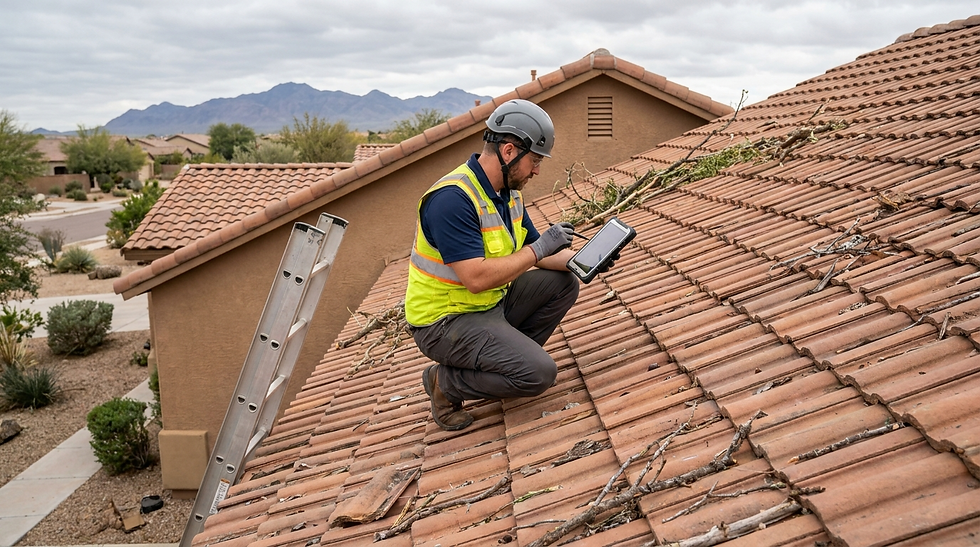
If your home has experienced a significant storm, consider these steps:
Perform a visual inspection from the ground.
Remove large debris if it is safe to do so.
Check ceilings for water stains.
Document any visible damage with photographs.
Schedule a professional roof inspection.
Avoid climbing onto your roof yourself, as damaged roofing materials can become unstable after severe weather.
Why Professional Roof Inspections Matter
Not all storm damage is immediately visible.
Professional roofing inspections help identify:
Hidden leaks
Damaged flashing
Loose tiles
Water intrusion
Structural concerns
Finding these issues early often prevents more expensive repairs and helps homeowners maintain the long-term value of their property.
Why Homeowners Trust Maricopa Roof Repair
Our team understands the unique challenges Arizona homeowners face during both the extreme summer heat and the annual monsoon season.
We provide:
Roof inspections
Roof repairs
Tile roof repair
Leak detection
Storm damage assessments
Preventative maintenance
Our goal is to help homeowners protect their investment with honest recommendations and quality workmanship.

Conclusion
Monsoon season is one of the most demanding times of year for Arizona roofs.
A prompt inspection after severe weather can identify hidden damage before it develops into costly leaks or structural problems. Whether your home experienced heavy rain, strong winds, or flying debris, taking action quickly helps protect your roof and your home.
If your roof hasn't been inspected after a recent monsoon storm, now is an excellent time to schedule a professional evaluation.
FAQs
Can Arizona monsoon storms damage my roof even if there are no leaks?
Yes. Wind and debris can loosen roofing materials or damage flashing without causing immediate leaks.
How soon should I inspect my roof after a monsoon storm?
A visual inspection should be done as soon as it is safe, followed by a professional inspection if you suspect any damage.
What is the most common type of monsoon roof damage?
Wind-damaged tiles, flashing failure, clogged gutters, and water intrusion are among the most common issues.
Does homeowners insurance cover monsoon roof damage?
Many insurance policies cover sudden storm-related damage, but coverage depends on your individual policy.
Should I climb onto my roof after a storm?
No. It's safer to inspect your roof from the ground and contact a professional if you notice signs of damage.


Comments